
CONFINED SPACE ATTENDANT SERVICES
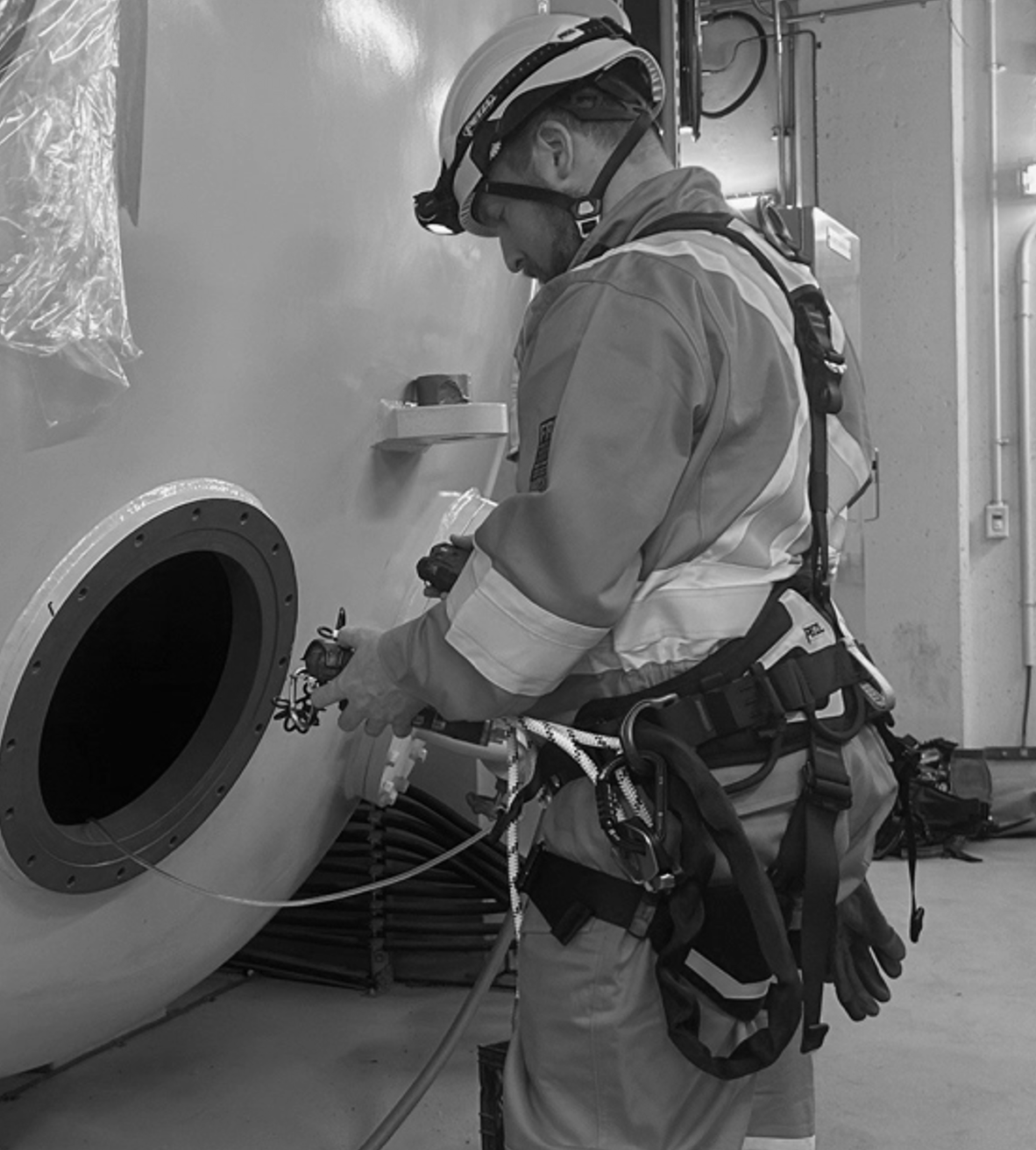
STATION 1 PROVIDES HIGHLY TRAINED CONFINED SPACE ATTENDANTS
WE USE BEST IN CLASS EQUIPMENT WITH DATA RECORDING AND UPLOAD TO THE CLOUD
THIS ALLOWS OUr CLIENTS TO CREATE A HISTORICAL RECORD FOR REFERENCE TO SHOW CONTROLS OF RISK AND USE OF SAFETY PRACTICES
One critical role that can never be forgotten during a Confined Space Entry is that of the Confined Space Attendant. They serve as the eyes and ears to monitor risk within and outside of the space to help protect Confined Space Entrant(s) while they are performing their work, and when needed, to stop the Entrant from working and exit the space immediately.
Trust our team to carry out the Confined Space Attendant duties and responsibilities in order to free up your staff so they can focus on their critical tasks. In some situations, our Confined Space Rescue Team can provide this service and Air Monitoring at no additional charge.
Attendant’s duties typically include, but are not limited to:
Being stationed outside of near the entrance to the Confined Space, or if multiple entrances, the one that best allows them to perform their duties
Must remain in constant communication with all Confined Space Entrants following the communications plan outlined in the relevant Confined Space Entry Plan or Safety Entry Plan
They must have and use a device to summon Confined Space Rescue Teams if they are not immediately positioned at the space during the entry. (Note, Station 1 Safety and Rescue recommends keeping Confined Space Rescue Teams positioned at each Confined Space Entry, as quick response in a rescue situation is essential and can impact the outcome during an incident).
Confined Space Attendants are never to enter the Confined Space in accordance with Section 15 (2) of Ontario Regulation 632/05 - Confined Spaces. (Note, they can be replaced with another Attendant, and then be reassigned, but always refer back to your relevant plan and your Confined Space Program).
Attendants are also required to monitor the safety of the Entrant(s) / Worker(s) inside the space. This is partially done through verbal communications, or in some unique circumstances video / audio, but also through Atmospheric Air Monitoring using calibrated and bump tested air monitors. (Note, air monitors are used to detect the atmospheric hazards, where it is possible, to provide a warning to the Attendant and Entrant(s) of an atmospheric hazard, typically giving the Entant(s) more than enough time to evacuate from the Confined Space allowing for the employer to determine the change in atmosphere and ability to put corrective measures in place prior to restarting work within. (Note, common 4 gas monitors will detect chemicals that displace or increase the level of Oxygen. They will detect Carbon Monoxide, Hydrogen Sulfide, and then most Flammable and Explosive Gases as part of the Lower Explosive Limit (LEL) sensor. But, it doesn’t detect everything. This is why a formal Confined Space Assessment is completed well in advance of needing to enter into a Confined Space.