CONFINED SPACE RESCUE STANDBY SERVICES
tailored rescue plans and equipment
Confined Space Attendant and air monitoring support
expert rescue specialsts
entry and non-entry rescue capabilities
Station 1 Safety and Rescue leads in Confined Space Rescue by bringing together a team of health and safety professionals and emergency responders. With high-quality, client-focused protection by pairing experienced and Fully Trained Firefighters, Pre-Fire Service Graduates, and Expert Rescue Specialists with best-in-class equipment and tailored rescue plans, we are a premier rescue team that works closely with our clients to protect their staff and contractors from hazards. And should there be a need for rescue due to a change in atmosphere, a fall, or a medical event, our on-site team will immediately respond to support Confined Space Entrants, bring them out of the space, and provide first aid until paramedic services arrive on scene.
Our Confined Space Rescue Teams conduct thorough pre-entry hazard assessments, identify risks clients may not anticipate, and maintain continuous on-site monitoring before and during operations to prevent incidents and ensure regulatory compliance with Ontario Regulation 632/05 - Confined Spaces.
What we provide to our clients:
A Minimum of 2 Confined Space Rescue Specialists to Perform Rescue
Additional Rescue Specialists / Attendants Base on Space Configuration, Purpose of Entry, and Client’s Task Needs
Confined Space Permits, Coordination Documents, Confined Space Rescue Plans, and Hot Work Permits
Continuous Air Monitoring (Exotic Gas Monitoring as Required)
Digital Air Monitoring Results Available Following Rescue (On Request)
Confined Space Rescue Equipment (Specific to Each Space, Entry, and Type of Work Performed Within)
First Aid and Patient Packaging Equipment
Rope Rescue Equipment (Our Confined Space Team Includes High Angle Rescue Specialists)
We are strategically positioned across Ontario to serve South-Western Ontario, the Greater Hamilton, Toronto, and Kitchener-Waterloo Areas, Central Ontario, as well as Eastern and Northern Ontario. We work closely with our clients to understand their unique confined space rescue needs, ensuring a smooth and seamless process. This way, they can focus on their tasks with confidence, knowing they have the right resources backing them up and keeping their workers safe.
FREQUENTLY ASKED QUESTIONS
What is a Confined Space in Ontario? Before I get to the point of putting a worker in a high-risk area, what are Confined Spaces and what is the risk?
Answer - Under Ontario Regulation 632/05 - Confined Spaces, a Confined Space is defined as a fully or partially enclosed space that is A) not both designed or constructed for continuous human occupancy, and B) in which an atmospheric hazard may occur because of its construction, location, or contents, or because of the work that is done within it.
For A) think about Grain, Corn, Soy Silos. Silos that hold Chemicals. Manholes (Sanitary and Storm). Industrial Ovens and Kilns. Shafts, Subcellars, Boilers, Food Grade Tanks and Vats, Pressure Vessels, Hydro Vaults below ground. Essentially, places that are not designed for people to work or be within for an 8-hour day, everyday. They are not designed with the idea to put a person(s) within it where they have installed lighting, ventilation, emergency exits, running water, washrooms, etc. They are spaces that are meant to allow for periodic access, often for maintenance reasons. These spaces primarily serve to perform another function such as moving a substance, storing materials, completing a process, or protecting people and the environment from something that could injure a person if they were to come into contact with the substance or a thing within the space. There is a wide variety of temporary or permanent structures that would meet this part of the definition for a Confined Space, BUT this is a two-part definition. We need to have an A) and the potential for B) for there to be a Confined Space.
For B) now consider what is within the space you thought of above. Not necessarily a hazard that will cut a person or an area where they could fall, but an atmospheric hazard that could displace Oxygen, increase the amount of Oxygen, be Poisonous to Breathe In, or be Flammable or Explosive. Examples include but are not limited to Carbon Dioxide (C02), Carbon Monoxide (CO), Hydrogen Sulfide (H2S), Methane (CH4), Chlorine (CL), Ammonia (NH3), Gasoline (C8H18), Volatile Organic Compounds, and more.
Combining an atmospheric hazard into a fully or partially enclosed space creates an increased risk to a person(s) that needs to enter. If A) and B) exist and cannot be designed out or eliminated prior to an entry, a worker would be entering a Confined Space. This is why employers will have a formal Confined Space Assessment completed to verify what is and what is not a Confined Space. The formal assessment prior to entry identifies the hazards within the space in order to develop control plans to allow for a safe entry with additional redundancies such as Air Monitoring and on-site Confined Space Rescue Teams.
So, what is the risk? The risks can be low depending on the space. In some cases, with the right controls, the greatest risk may be that a worker has an emergency health condition within the space and requires evacuation and first air until paramedics arrive. Or, without the right controls a worker may be in a situation in a sanitary chamber where there is a real risk of being exposed to Hydrogen Sulfide which is toxic, corrosive, and flammable which could be fatal to the worker entering the space and their colleagues if they attempt a rescue and have not been appropriately trained to work with and manage that hazard. This is why developing a Confined Space Program and having competent and highly trained people are needed with planning to work in or around Confined Spaces. Yes, it’s a lot! But the greater the risks, the greater the controls. If you haven’t had a chance read Ontario Regulation 632/05 - Confined Spaces. It’s not a long Regulation and will provide you a ton of insight.
What about Federally regulated workplace or project? Is a Confined Space the same whether the employer is a Federally regulated versus Provincially?
Answer - There is a difference here. Federal workplaces have a higher standard for what is considered a Confined Space. Provincially, there must be a space that is not both designed or constructed for continuous human occupancy, and in which an atmospheric hazard may occur. For Federal workplaces, the Canada Occupational Health and Safety Regulations in Part XI Confined Spaces - Section 11.01 states that a Confined Space is A) enclosed or partially enclosed, B) is not designed or intended for continuous human occupancy, and C) has a limited or restricted means of entry or exit or an internal configuration that could complicate provision of first aid, evacuation, rescue or other emergency response. But it doesn’t require there to be a hazard that is likely to cause injury, illness, or other adverse health effects for it to be a Confined Space. However, there is an additional definition for what is considered a “Hazardous Confined Space”.
Hazardous Confined Spaces under the Federal Regulation (for Federally Regulated workplaces), means a confined space that, when entered, occupied or exited by persons, presents hazards likely to cause injury, illness or other adverse health effects to persons entering, exiting or occupying it because of A) its design, construction, location or atmosphere, B) the materials or substances within it, or C) any other conditions relating to it. Hazardous Confined Spaces require additional controls as outlined in Canada Occupational Health and Safety Regulations in Part XI in comparison to a “standard" Confined Space.
Can “911 / Fire Department” be the emergency response plan if there is an emergency during entry into the Confined Space?
Answer - No. "911” / the Fire Department are incredibly important and will still be called to support response, but the response plan needs to be immediately ready for use if something goes wrong. Here are a few reasons why an on-site Rescue Team needs to either be trained or contracted to assist:
Limited Response Time: Emergency responder time varies based on their proximity between their Fire Hall to your workplace, and if there is a situation where there is complete interruption of oxygen to the worker can result in loss of consciousness in about 15 Seconds. Damage to the brain begins to occur after about 4 Minutes without oxygen (Hypoxic and anoxic brain injury. Headway. https://www.headway.org.uk/about-brain-injury/individuals/types-of-brain-injury/hypoxic-and-anoxic-brain-injury/). This means that emergency response needs to be first planned out ahead of time, second, be onsite and ready for immediate implementation, and third, be performed by trained and competent workers or contractors. With this in mind Toronto Fire Services complied data from 2013 to 2016 looking at several response time factors including Total Response Time (the overall time interval from when a call is acknowledgement to the arrival of the first response unit at scene). For Toronto Fire Services in 2016 the city-wide Total Response Time was 7:03 Minutes 83% of the time. City of Toronto. (2017). Toronto Fire Services response metrics (Report No. CD21.4). https://www.toronto.ca/legdocs/mmis/2017/cd/bgrd/backgroundfile-104230.pdf. Now apply this to your municipality or county, and consider where your workplace is located in proximity to the nearest Fire Fall, which is if your team is not operating in a remote location. Add traffic, and the potential that your local Fire Hall may have a call that they are on, and another Fire Hall is supporting a zone outside of their primary area. All these factors build the case for having a team on-site that can respond immediately, especially if we are considering 4 Minutes for a person not receiving oxygen. You will always call “911”, but your Fire Department is coming to your site to support your Confined Space Rescue Team following the implementation of the internal Confined Space Rescue Plan. Your team or contractor is the one that knows the details of the Confined Space, and they can respond the fastest.
Legally Required: Section 11 of Ontario Regulation 632/05 requires employers performing Confined Space Entry to ensure that no worker enters a Confined Space unless in accordance with their relevant plan (Safe Entry Plan), adequate written on-site rescue procedures that apply to the confined space have been developed and are ready for immediate implementation.
-
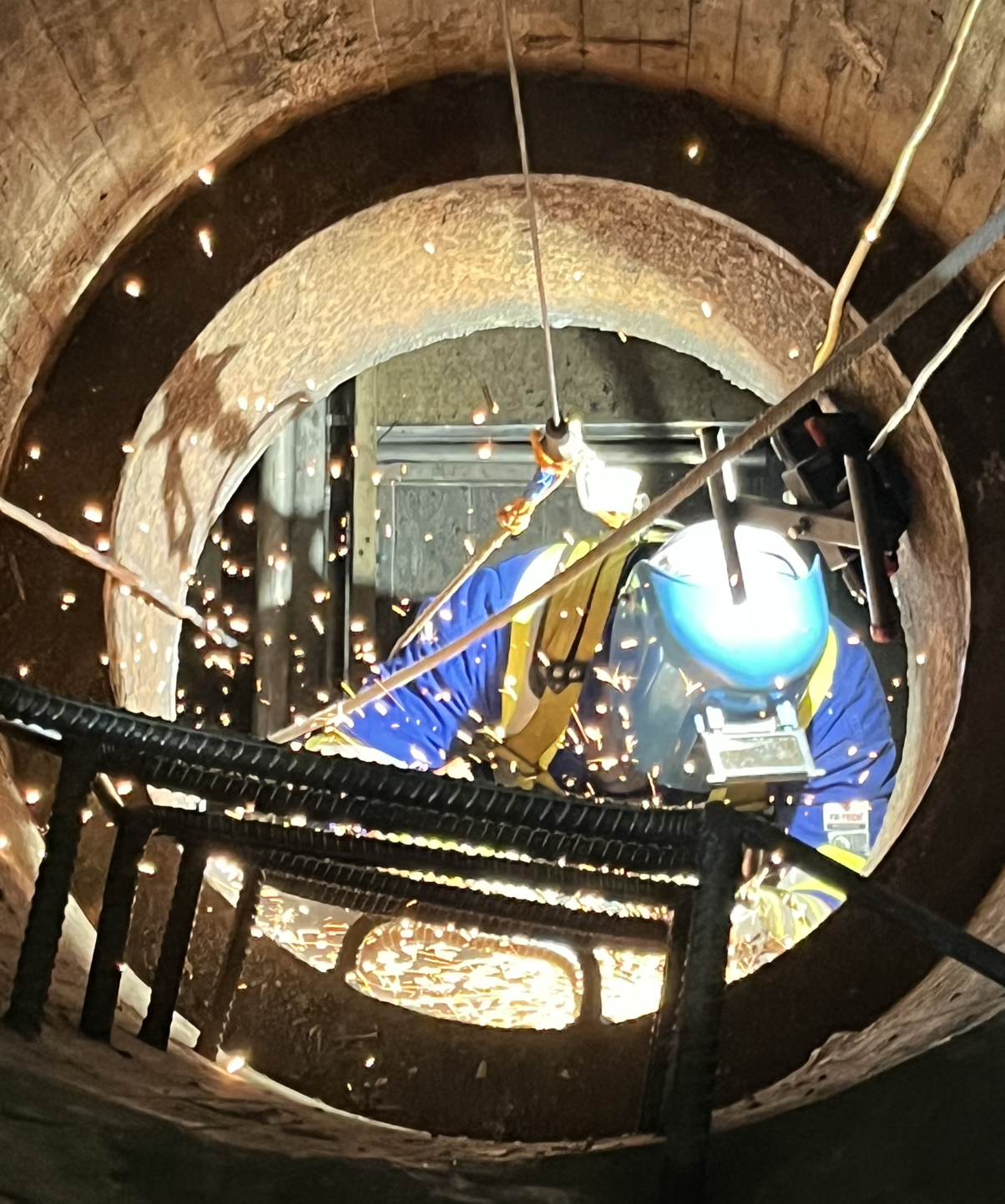
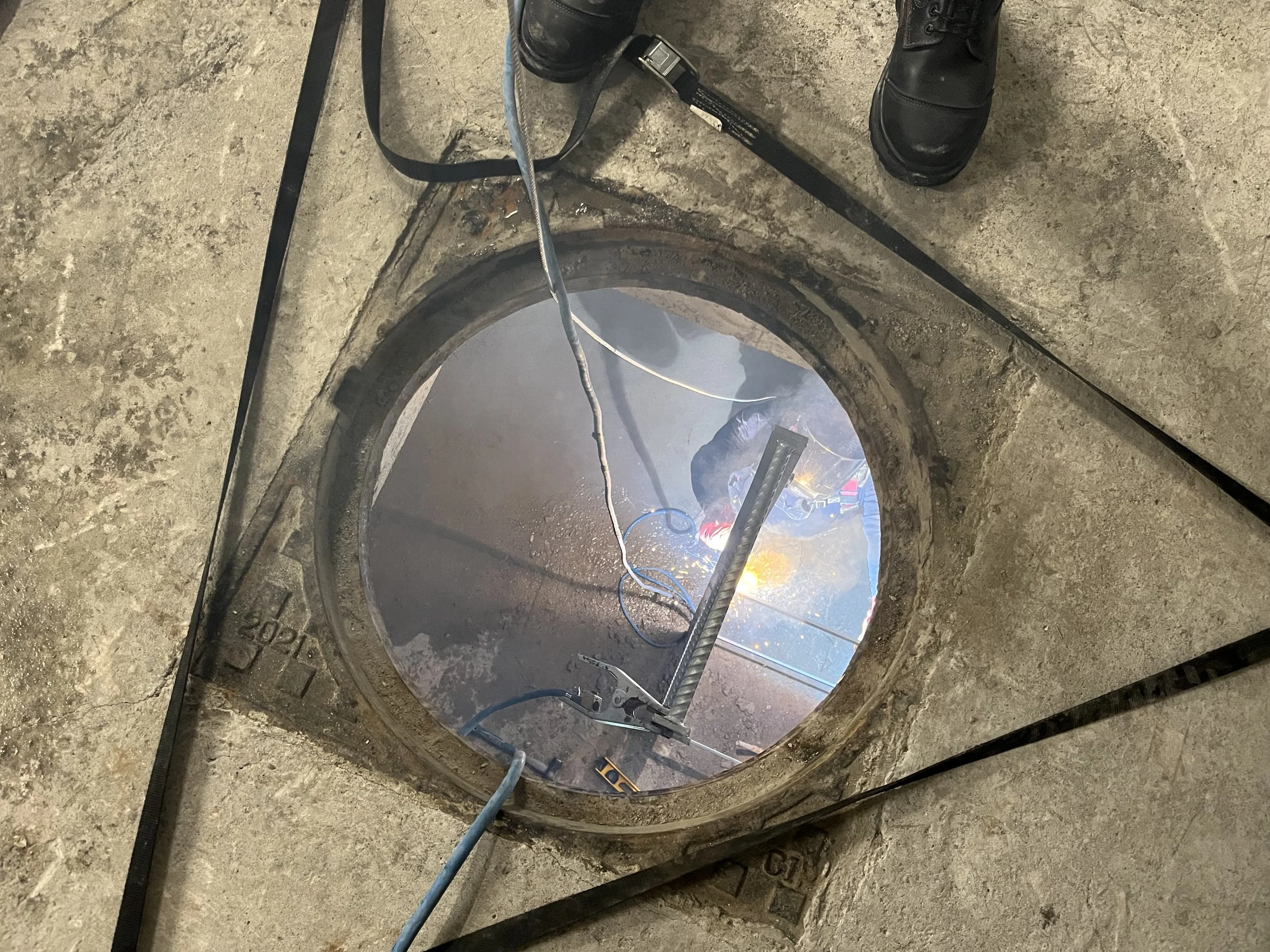
![Worker welding inside a large, underground pipe or tunnel, with sparks flying around. The worker is supported by a expert level emergency response team that specializes in Confined Spaces.]()
The Atlas Project
-
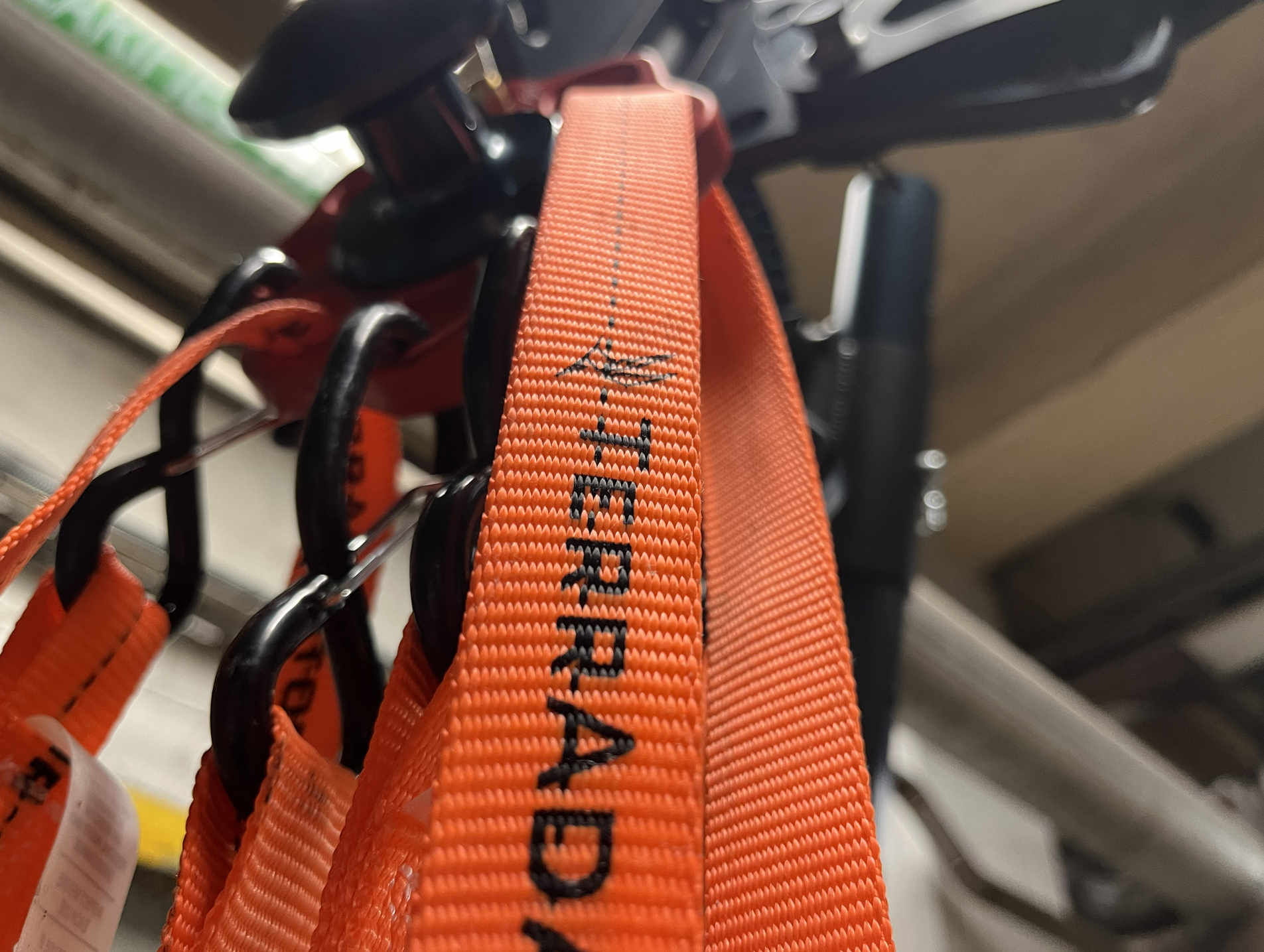
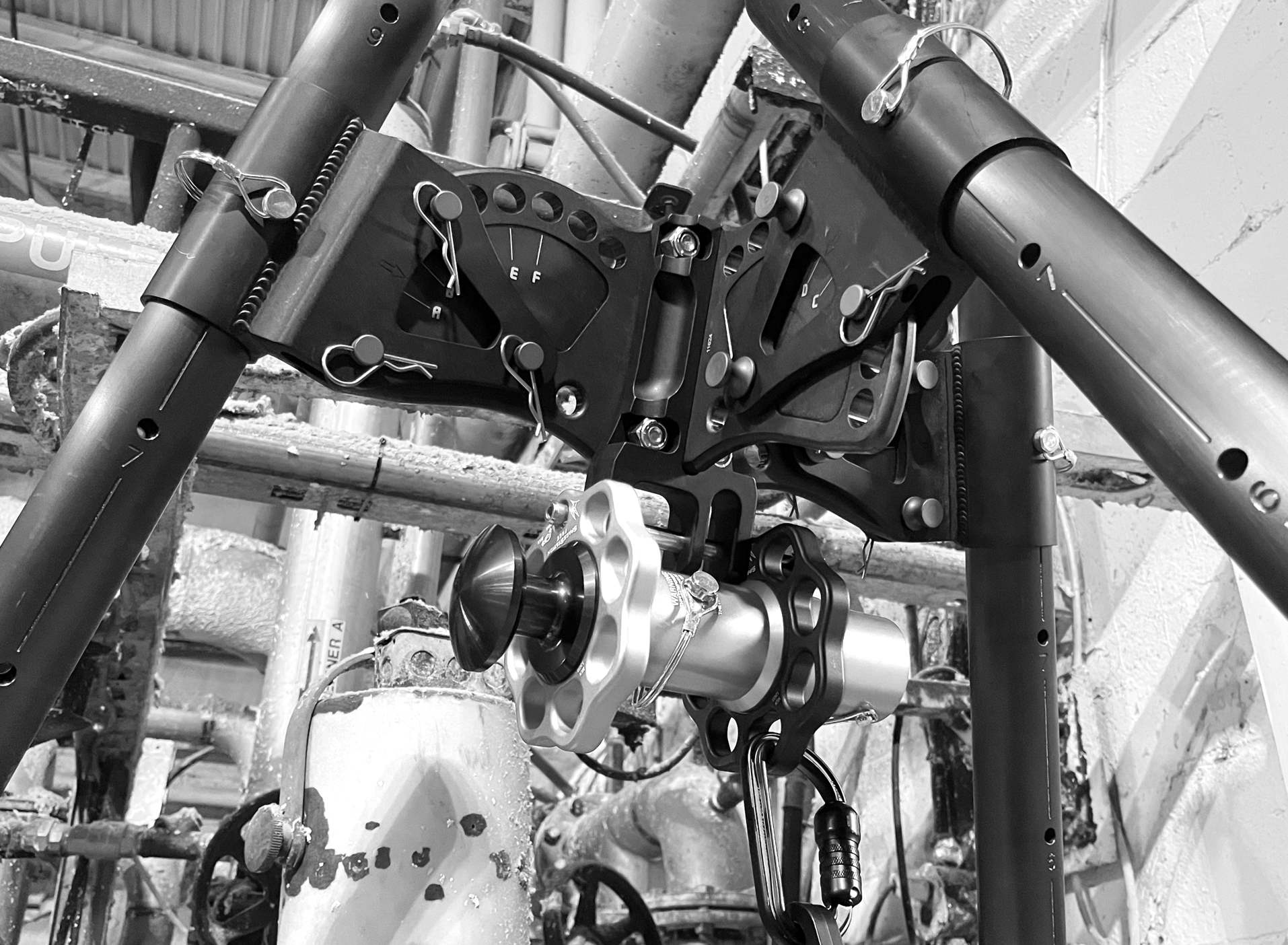
![Close-up of an orange strap with black text that says Terradaptor, an advanced Tripod system for Confined Space Rescue and High Angle Rescue services.]()
TERRADAPTOR SETUP FOR RESCUE STANDBY
-
![Construction worker inside a bobcat skidsteer in a muddy construction site with snow, dirt, and ice. Removing material from a confined space with exhaust fumes. Protected by a Confined Space Rescue Team that will enter the space to save the worker.]()
THE BIOSOLID CLEAN OUT PROJECT
-
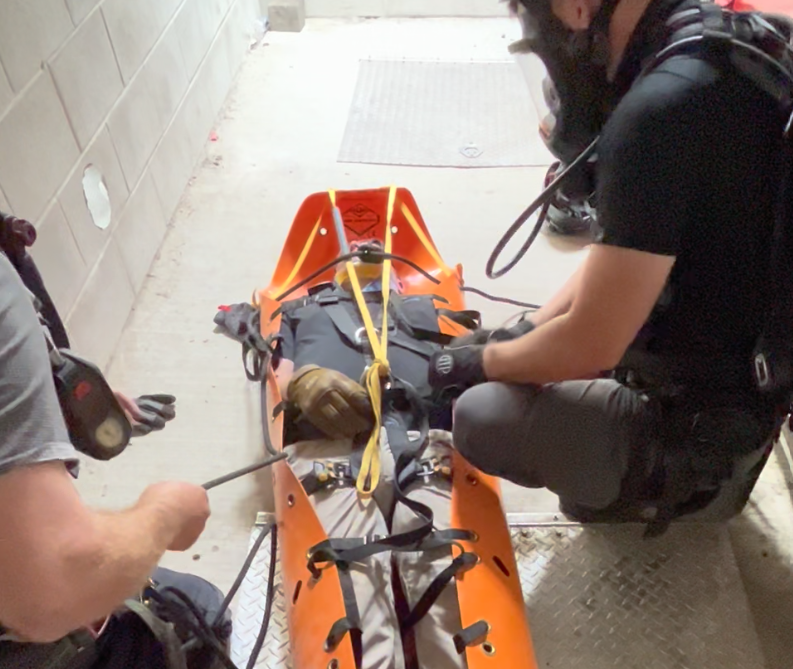
![Emergency responders handling a patient on a stretcher in a hospital or emergency setting.]()
PATIENT PACKAGING TRAINING
-
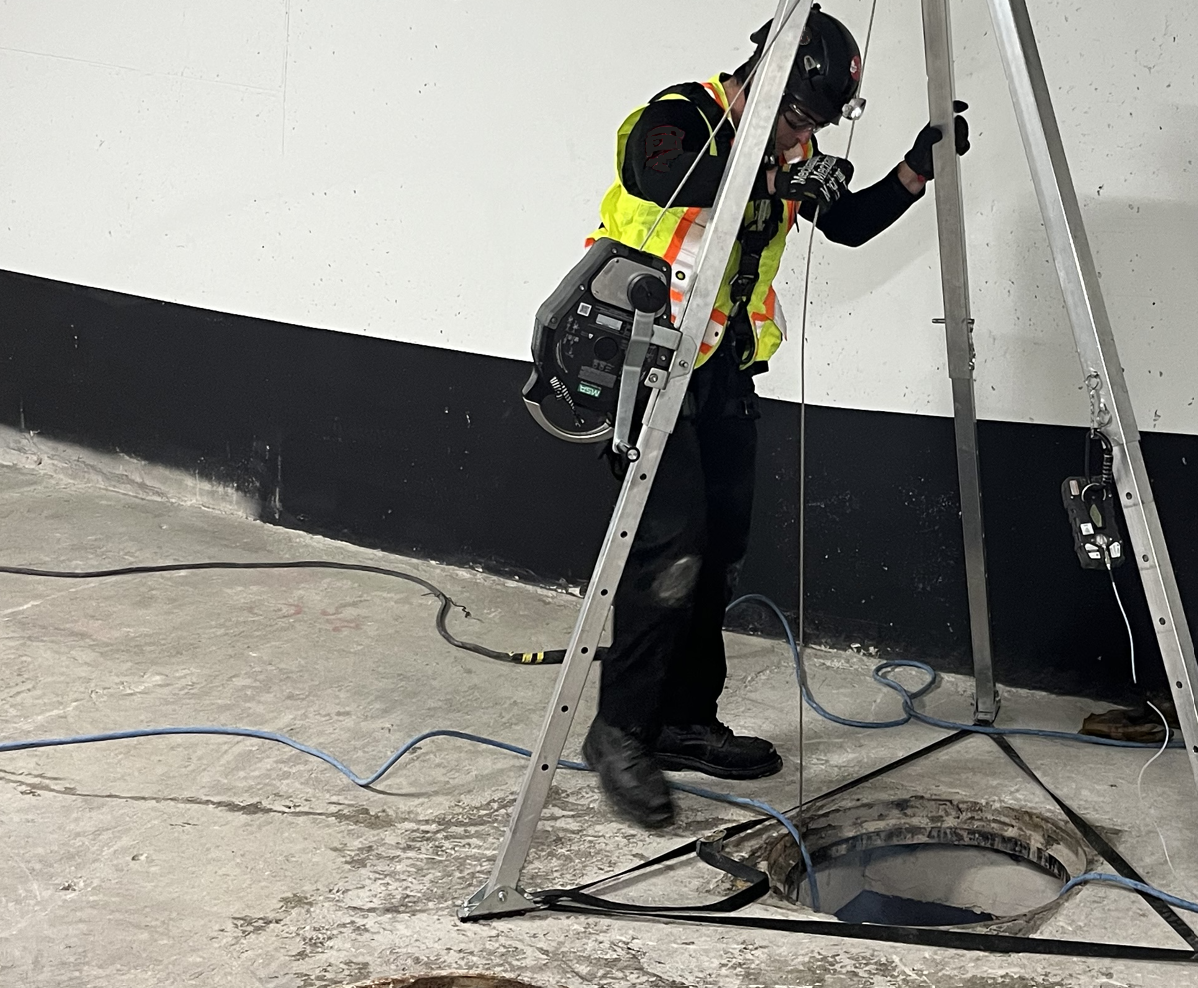
![A worker wearing safety gear and a high-visibility vest inspects a large manhole opening with a ladder and equipment nearby.]()
THE GARAJECT
-
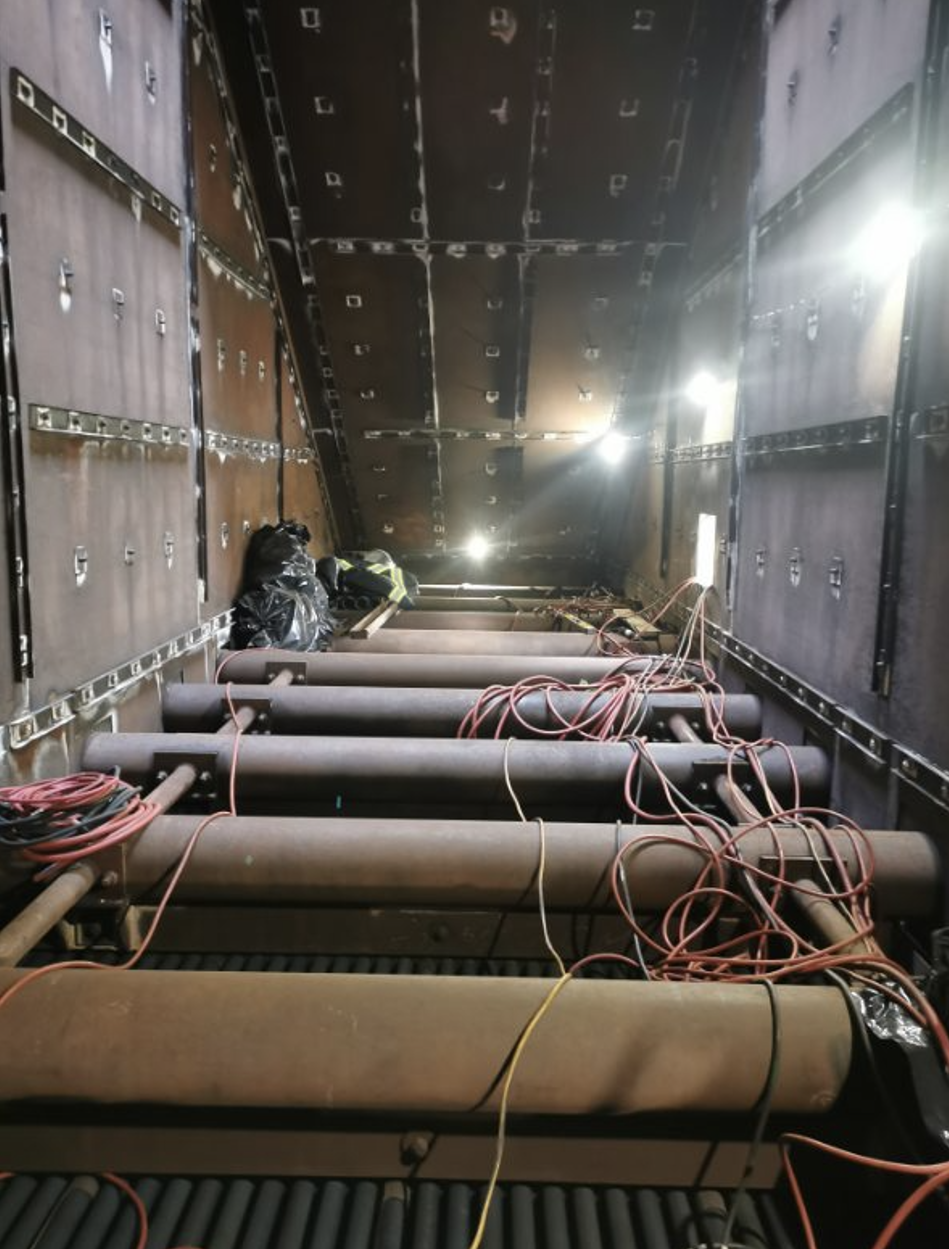
![View inside a large industrial or construction vehicle with black metal walls, pipes, and tangled wires, with bright lights illuminating the interior.]()
THE COGEN PROJECT
-
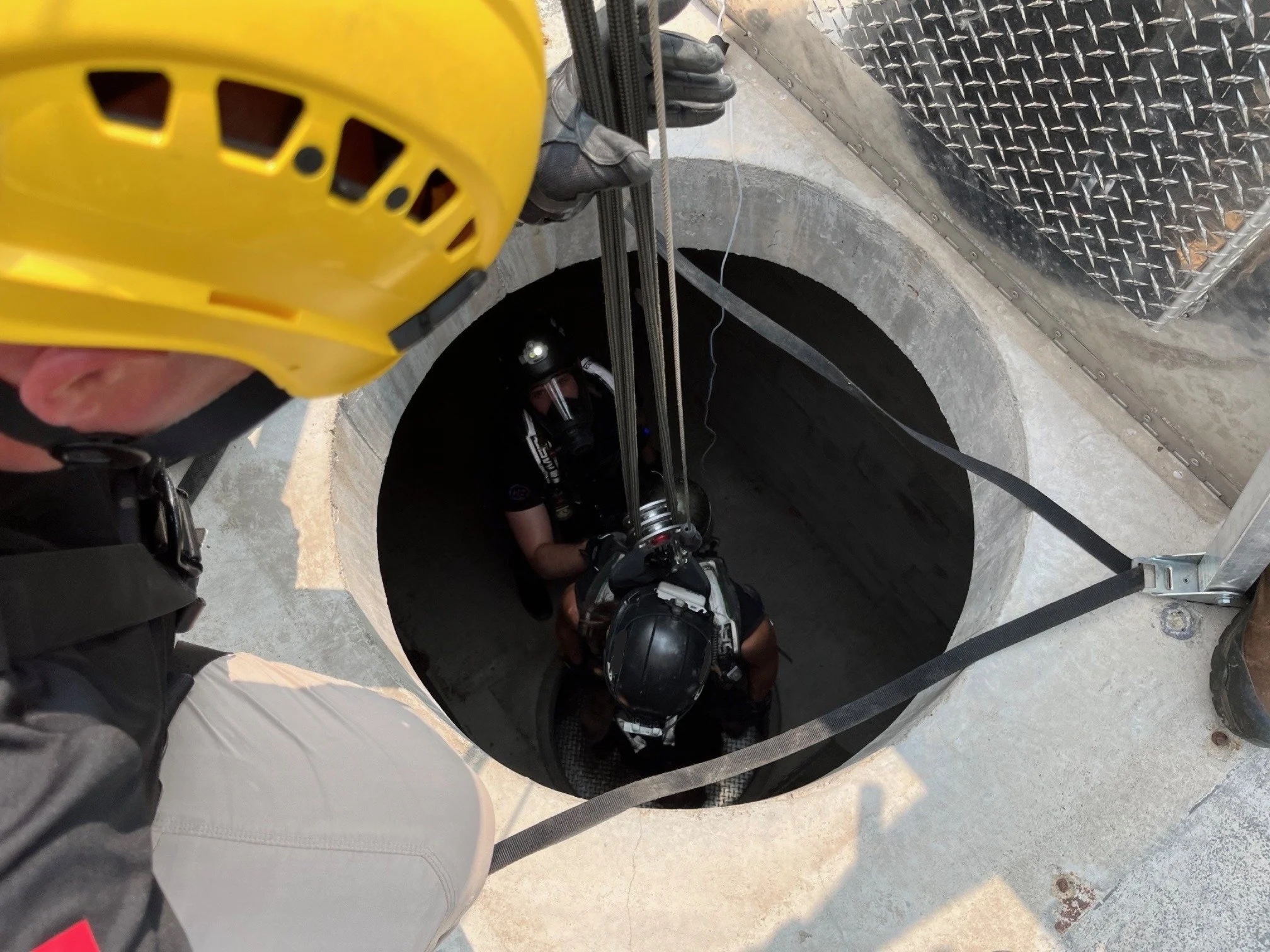
![Worker wearing safety helmet and gloves using equipment to perform maintenance in an underground utility shaft.]()
S1SR PRACTICAL RESCUE TRAINING
-
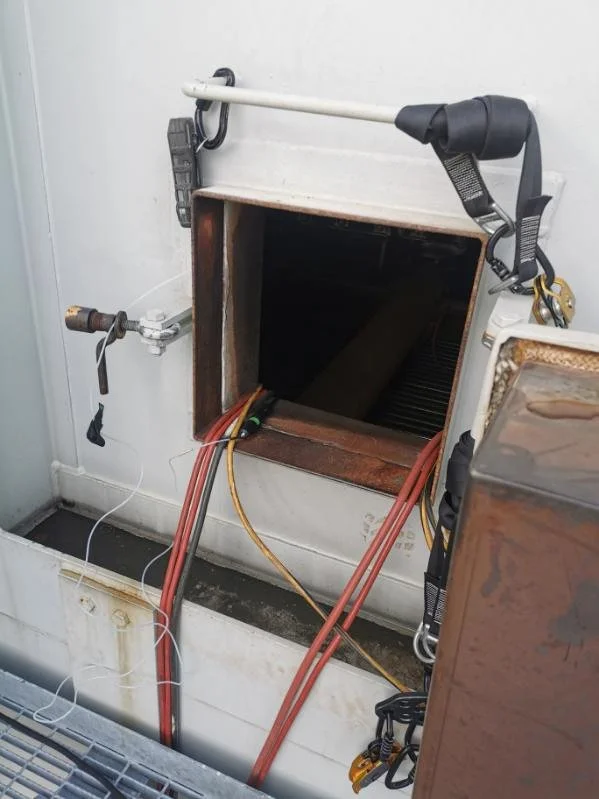
![CONFINED SPACE ACCESS POINT ON SCAFFOLDING FOR ENTRY INTO THE CONFINED SPACE]()
NEPTUNE PROJECT
-
![CONFINED SPACE RESCUE FOR NEWLY INSTALLED CISTERN ACCESS LADDER]()
CISTERN ACCESS LADDER INSTALL PROJECT
-
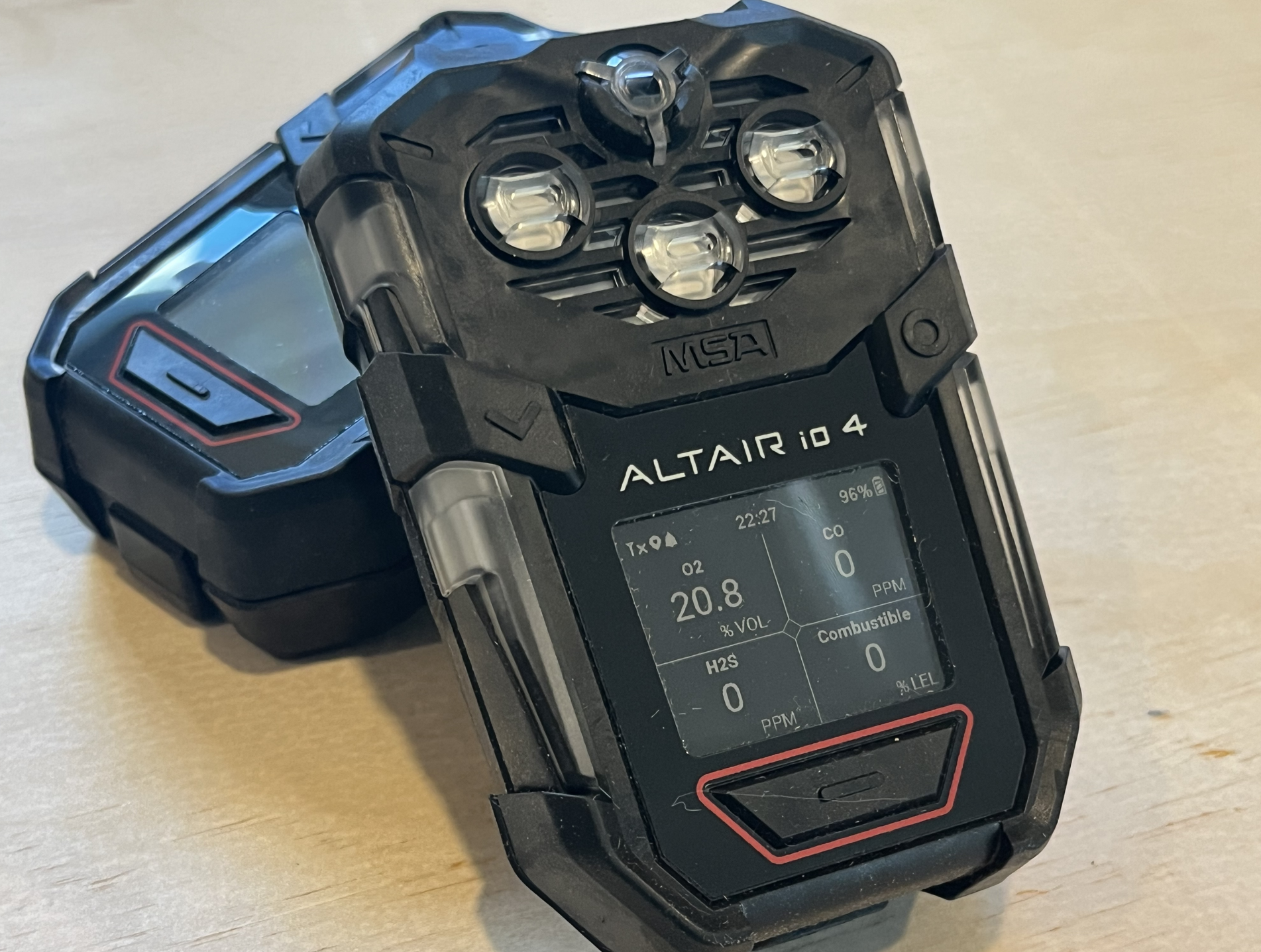
![MSA'S NEW ALTAIR iO4 AIR MONITORS]()
MSA NEW ALTAIR iO4 AIR MONITORS
-
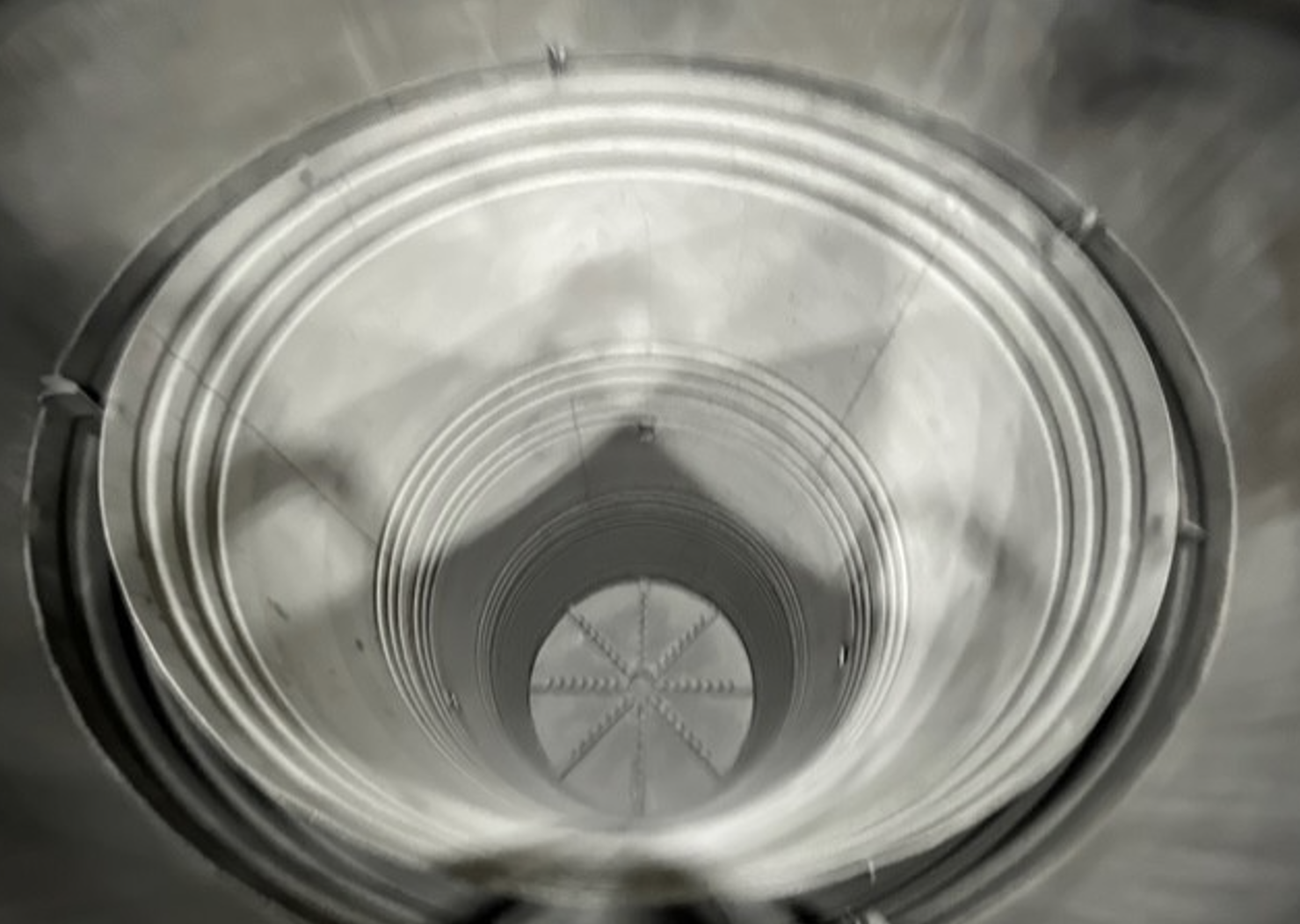
![CONFINED SPACE RESCUE REVIEW OF AUTOCLAVE]()
THE AUTOCLAVE PROJECT